Inclined Screens: What Everyone Gets Wrong

The long-held belief that inclined screen output always beats horizontals falls apart the moment you look at what actually makes it through the deck.

PUBLISHED: NOVEMBER 2025
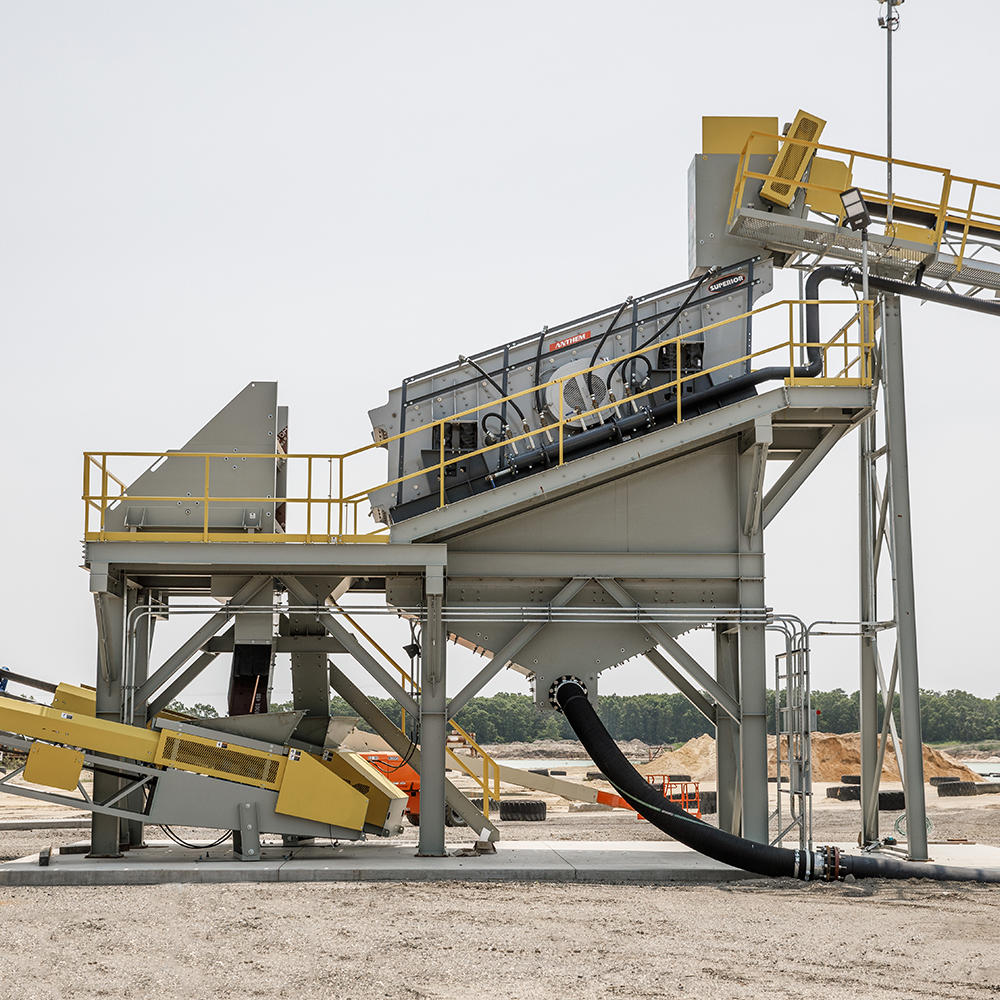
25.11 TOE Hero - Anthem Inclined

When discussing screening efficiency, industry people often say, “Well, I can always get more capacity from an inclined screen.”

Ed Sauser, a vibratory product specialist at Superior, says he hears that all the time. So, is it true? Do inclined screens always outperform horizontal screens?

When choosing screens, Sauser notes that producers are most concerned about throughput, product gradations, and fines removal - and some may assume that since inclined screens operate at a steeper angle, gravity alone will lead to more throughput. But that’s not always the case, especially when the inclined is overloaded – a common situation that leads to material carryover, recirculating loads, and out-of-spec product.

True Capacity Explained

“When we size a screen, the real question is how much material can pass through the deck openings, not how much can slide across them,” Sauser explains.

He notes that what some operators call “more capacity” on an inclined screen is often just more "material handling," or material moving quickly over the surface instead of actually passing through it.

Plant operators often assume that faster material travel on an inclined screen translates to higher production. In reality, a horizontal screen will outperform an overloaded incline when you're measuring sellable tons per hour. Horizontal screens look slower, but that added time on the deck creates more chances for proper material stratification. Without that, producers pay for it later through increased wear, reprocessing, and higher cost-per-ton.

Superior Names Cody Tufford as New Vibratory Equipment Product Manager

In his new role, he’ll drive product improvements and support dealers in the field. He's been the chief engineer of vibratory equipment for the last several years. Ed Sauser stays on as a product specialist, bringing his decades of knowledge and mentorship to the whole vibratory team.

Cody's Contact Information
☎️ (810) 569-2845
✉️ cody.tufford@superior-ind.com

25.11 TOE-Cody Tufford-2

Strengths of Each Design

Sauser notes that each screen type has its advantages and a clear place.

One of the most common designs today is the elliptical-stroke horizontal screen (i.e. Guardian® Horizontal Screen), a high-energy unit that operates with roughly twice the horsepower and G-force of traditional models. These horizontals handle heavier bed depths and use an oval throw to keep material moving across the deck. As a result, they perform especially well in wet, sticky, high-moisture applications or in situations where precision stratification is needed to achieve tight, exacting specs.

In contrast, inclined screens use less energy and rely more on gravity to move material. They typically require a smaller upfront investment and are well suited for higher-volume applications where product specifications aren’t as demanding.

Myth Versus Reality

That common perception that inclined screens always outperform horizontals is a myth. Each model has its strengths and the choice of either depends upon specific application, material parameters, and production goals.

The key takeaway on screen types? Inclined screens are great for speed and volume in general applications. Horizontal screens are best for precision stratification, fines recovery, and overall efficiency.

Remember, more tons across the screen deck does not always equal more high-quality, in-spec product.

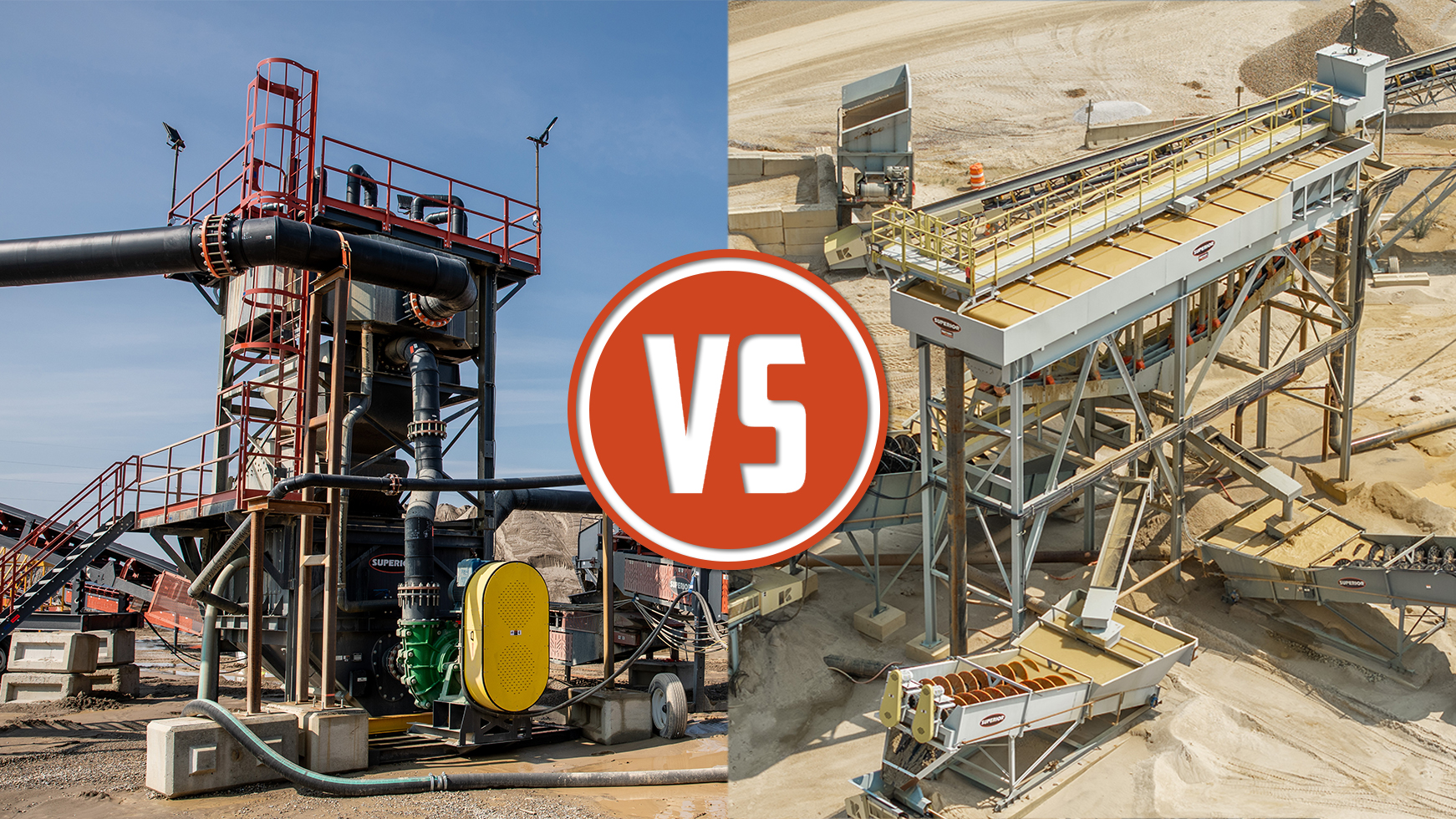
25.11 TOE-Cyclones v Tanks-2

Cyclones vs Tanks: Details Competitors Leave Out

There’s a bold claim out there that cyclones can replace a classifying tank in every scenario. But once the feed changes, cyclones start making inconsistent cuts.
25.11 TOE-PECO-4

Built for Uptime: Inside PECO's New Flagship Facility

With centralized dispatch, larger service bays, and faster parts picking, Power Equipment is delivering faster, more efficient support across their territory.

25.11 TOE-CONEXPO-1

8 Things We Already Know About CONEXPO-CON/AGG

Scheduled March 3–7, the show is already coming into focus. Here, we’ve gathered some early insights to give dealers a head start on what’s ahead.

subscribe

©2025 Superior Industries, Inc.